Rock Paper Scissors in Japanese: How to Play Janken
17 June 2025
🎯 Want to actually speak Japanese, not just read about it? Practise with a friendly tutor for about the price of a coffee — try a lesson on italki → Affiliate link — supports Wakoku at no extra cost to you.
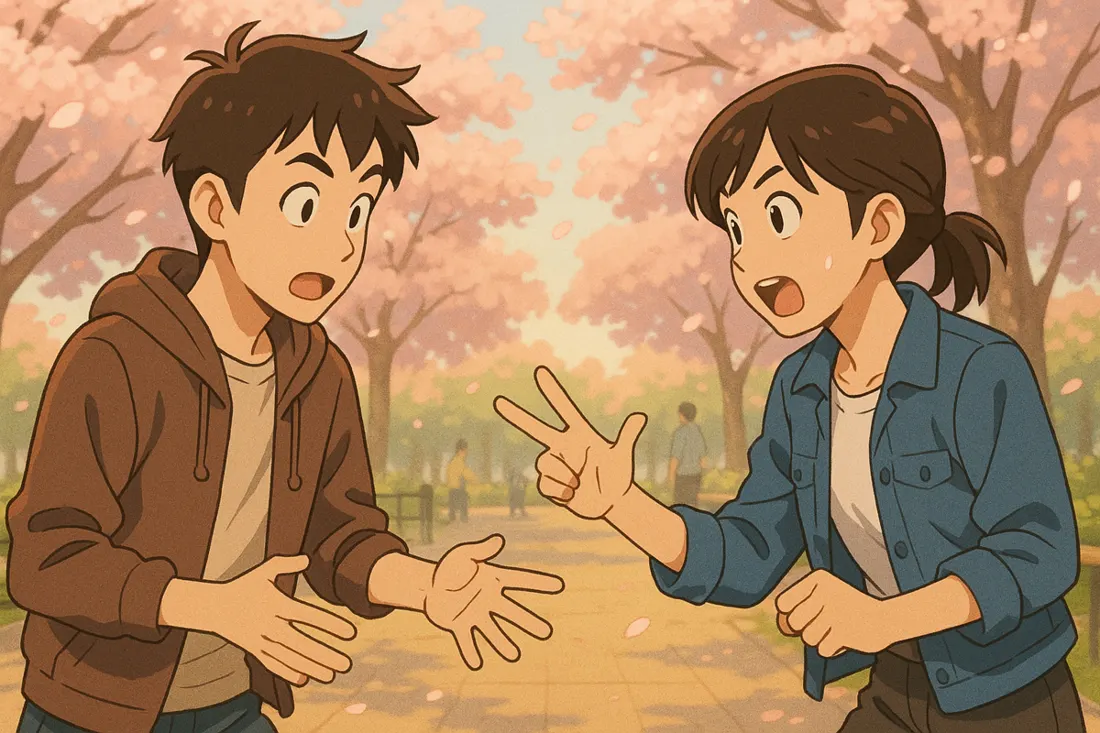
Picture this: you’re hanging out with Japanese friends, and suddenly someone suggests settling a disagreement with a quick game. Everyone starts chanting mysterious phrases while throwing hand gestures—and you’re completely lost! Don’t worry, you’ve just encountered rock paper scissors in Japanese, known as じゃんけん (janken), one of Japan’s most beloved cultural traditions.
Understanding rock paper scissors in Japanese isn’t just about learning a game; it’s your gateway to authentic social interactions and Japanese culture. Whether you’re planning to visit Japan, studying the language, or simply want to impress your anime-loving friends, mastering janken will boost your confidence in real-world Japanese situations.
What Makes Rock Paper Scissors in Japanese Special?
Unlike the Western version, rock paper scissors in Japanese follows specific cultural protocols that make it uniquely engaging. The Japanese call this game じゃんけん (janken), and it’s deeply woven into daily life—from elementary schools to corporate offices.
Rock paper scissors in Japanese is called じゃんけん (janken).
The beauty of janken lies in its ceremonial approach. While Western players might casually throw their hands, Japanese participants follow a structured ritual that ensures fairness and adds excitement to every round.
The Three Sacred Gestures of Janken
グー (Guu) - Rock
- Pronunciation: “goo” (like the English word “goo”)
- Gesture: Closed fist
- Defeats: Scissors (チョキ)
チョキ (Choki) - Scissors
- Pronunciation: “cho-kee”
- Gesture: Index and middle finger extended (like a peace sign)
- Defeats: Paper (パー)
パー (Paa) - Paper
- Pronunciation: “pah”
- Gesture: Open palm, fingers spread
- Defeats: Rock (グー)
Pro tip: If you’re serious about mastering Japanese fundamentals like these, check out our comprehensive JLPT N5 Study Guide for structured learning that covers essential vocabulary and cultural concepts.
The Janken Ritual: Step-by-Step Guide
Step 1: 最初はグー (Saisho wa Guu) - “Starting with Rock”
Before any gestures fly, players synchronize by saying “最初はグー” (saisho wa guu) while showing closed fists. This phrase literally means “first is rock” and ensures everyone starts simultaneously.
Example dialogue:
- Japanese: 最初はグー!
- Romaji: Saisho wa guu!
- English: Starting with rock!
Step 2: じゃんけんぽん (Janken Pon) - The Big Reveal
Immediately after the opening, players chant “じゃんけんぽん” (janken pon). The magic happens on “ぽん” (pon)—this is when everyone reveals their chosen gesture.
Sample conversation:
- Japanese: じゃんけんぽん!
- Romaji: Janken pon!
- English: Rock paper scissors!
Step 3: あいこでしょ (Aiko Desho) - Handling Ties
When players throw identical gestures, it’s called あいこ (aiko)—a tie. Players then say “あいこでしょ” (aiko desho) meaning “it’s a tie, right?” and immediately play another round.
Tie scenario:
- Japanese: あいこでしょ!
- Romaji: Aiko desho!
- English: It’s a tie, let’s go again!
Cultural Significance: Why Japanese People Love Janken
Rock paper scissors in Japanese serves multiple social functions beyond simple entertainment. In Japanese society, where harmony and fairness are paramount, janken provides an impartial way to make decisions without anyone losing face.
Common uses include:
- Determining batting order in sports
- Choosing who pays for dinner
- Selecting group representatives
- Breaking classroom ties
- Office decision-making
This democratic approach reflects Japanese values of collective decision-making and avoiding direct confrontation—concepts you’ll encounter frequently when learning about Japanese culture, much like understanding Japanese greetings in social contexts.
Advanced Janken Variations
あっち向いてホイ (Acchi Muite Hoi)
After winning janken, the victor points in a direction while saying “あっち向いてホイ” (acchi muite hoi). If the loser looks in the same direction, they lose completely. If they look elsewhere, they play janken again.
Team Janken
With multiple participants, the game continues until only one gesture type remains. This variation can involve dozens of people and creates exciting tournament-style competitions.
Practice Phrases for Natural Conversation
Starting a game:
- Japanese: じゃんけんしよう!
- Romaji: Janken shiyou!
- English: Let’s play rock paper scissors!
Celebrating victory:
- Japanese: 勝った!
- Romaji: Katta!
- English: I won!
Accepting defeat:
- Japanese: 負けた…
- Romaji: Maketa…
- English: I lost…
Mastering the Timing: Essential Tips
- Listen for the rhythm: Japanese janken has a specific musical quality—practice the cadence until it feels natural.
- Watch the gestures: Pay attention to how Japanese people form their hand shapes; subtle differences can affect perception.
- Embrace the ceremony: Don’t rush through the phrases—the ritual aspect is crucial for authentic interaction.
- Learn the variations: Different regions might have slight modifications, so stay flexible and observant.
Quick Reference: Janken Cheat Sheet
Phase
Japanese
Romaji
English
Action
Setup
最初はグー
Saisho wa guu
Starting with rock
Show fists
Play
じゃんけんぽん
Janken pon
Rock paper scissors
Reveal gesture on “pon”
Tie
あいこでしょ
Aiko desho
It’s a tie
Play again on “sho”
Understanding rock paper scissors in Japanese opens doors to deeper cultural appreciation and smoother social interactions. Whether you’re a beginner or advancing your Japanese skills (similar to mastering complex kanji characters), janken provides practical, fun language practice that you’ll actually use in real conversations.
Frequently Asked Questions
Q: What is rock paper scissors called in Japanese? A: Rock paper scissors in Japanese is called じゃんけん (janken).
Q: How do you say the gestures in Japanese? A: Rock is グー (guu), paper is パー (paa), and scissors is チョキ (choki).
Q: What phrase starts the game? A: Players begin by saying 最初はグー (saisho wa guu), meaning “starting with rock.”
Q: What happens during a tie in janken? A: Players say あいこでしょ (aiko desho) and immediately play another round until someone wins.
Q: Is janken used seriously in Japan? A: Yes, janken is commonly used for fair decision-making in schools, offices, and social situations throughout Japan.
Ready to put your janken skills to the test? Start practicing these phrases today, and you’ll be settling disputes like a true Japanese native in no time!