Popular Japanese Last Names and Their Origins
21 May 2025
🎌 Fascinated by Japan? Learn the language with free bite-sized audio lessons — start free at JapanesePod101 → Affiliate link — supports Wakoku at no extra cost to you.
Have you ever been watching your favorite anime or Japanese drama and noticed certain last names appearing over and over again? There’s a fascinating reason for this pattern! While Western countries often have tens of thousands of surnames, Japan has a relatively concentrated pool of popular Japanese last names that many families share.
Understanding these common surnames not only enriches your Japanese language learning journey but also provides valuable insights into Japanese culture, history, and geography. Let’s explore the most popular Japanese last names and uncover what they reveal about this fascinating island nation.
The Most Common Japanese Last Names and Their Hidden Meanings
Japanese surnames typically combine natural elements, geographical features, or cultural concepts to create meaningful family identifiers. Most popular Japanese last names have kanji characters that tell a story about family origins or ancestral locations.
Top 10 Most Popular Japanese Last Names
- Satō (佐藤) - Combining “assistant/help” (佐) with “wisteria” (藤), this is Japan’s most common surname. Remarkably, if current trends continue, statistical projections suggest everyone in Japan could share this last name by the year 2531!
- Suzuki (鈴木) - Meaning “bell tree” or “bell wood,” this name beautifully connects the sound (鈴/suzu) with nature (木/ki).
- Takahashi (高橋) - Literally “high bridge,” suggesting ancestors who lived near an elevated crossing.
- Tanaka (田中) - This incredibly common name means “in the middle of the rice field,” reflecting Japan’s agricultural heritage.
- Watanabe (渡辺/渡邊) - “Crossing the border/area,” often indicating families who lived near water crossings.
- Itō (伊藤) - Combining a location marker with “wisteria,” similar to Satō but with different first kanji.
- Yamamoto (山本) - “Base of the mountain” or “mountain origin,” suggesting families who lived at the foot of mountains.
- Nakamura (中村) - “Middle village,” likely indicating a centrally located community.
- Kobayashi (小林) - “Small forest,” possibly referring to families who lived near or tended smaller wooded areas.
- Katō (加藤) - Combines “add” with “wisteria,” another variation in the popular “wisteria” surname category.
Nature-Inspired Popular Japanese Last Names
Japanese people have always maintained a deep connection with the natural world, which is beautifully reflected in their surnames:
- Mori (森) - Simply means “forest”
- Ishikawa (石川) - “Stone river”
- Aoki (青木) - “Blue/green tree”
- Yamashita (山下) - “Below the mountain”
- Kawaguchi (川口) - “River mouth/entrance”
If you’re fascinated by how Japanese culture intertwines with natural elements, you might enjoy our article on Kirin Japanese Mythology, which explores one of Japan’s most revered mythological creatures embodying harmony with nature.
Regional Patterns in Popular Japanese Last Names
Interestingly, the distribution of popular Japanese last names isn’t uniform throughout the country. Some surnames have stronger regional ties than others:
- Gotō (後藤) appears more frequently in western Japan, particularly around Kyushu
- Saitō (斎藤) is more common in eastern regions
- Chiba (千葉) (“thousand leaves”) is strongly associated with Chiba Prefecture
This regional variation adds another layer of cultural significance to Japanese surnames, often providing clues about family migration patterns and historical settlement areas.
Understanding Japanese Surname Structure
Learning to recognize common patterns in popular Japanese last names can help you decode their meanings more easily:
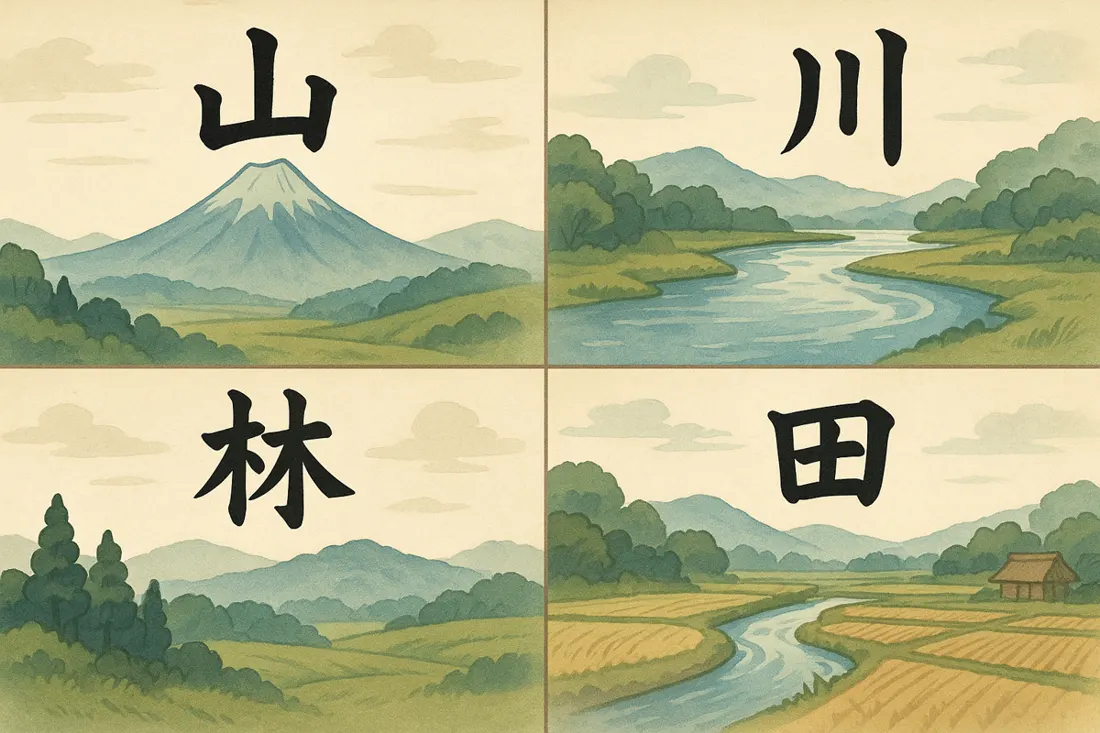
- Natural features: Look for characters like 山 (yama/mountain), 川 (kawa/river), 田 (ta/rice field)
- Directional elements: 北 (kita/north), 南 (minami/south), 東 (higashi/east), 西 (nishi/west)
- Size descriptors: 小 (ko/small), 大 (ō/big), 中 (naka/middle)
- Plant references: 松 (matsu/pine), 竹 (take/bamboo), 藤 (fuji/wisteria)
For language learners working toward JLPT certification, recognizing these kanji patterns is excellent reading practice. Our comprehensive JLPT N5 Study Guide includes techniques for mastering these fundamental kanji and their various combinations in everyday Japanese contexts.
The Cultural Significance of Popular Japanese Last Names
Unlike Western naming traditions, Japanese culture places the family name first, reflecting the traditional emphasis on family identity over individual identity. This ordering (Tanaka Yuki rather than Yuki Tanaka) highlights the importance of lineage and family connections in Japanese society.
If you’re interested in exploring more aspects of Japanese cultural identity, our article on Shachihoko: The Mythical Castle Guardian of Japan offers fascinating insights into traditional architecture and protective symbolism.
Learning Japanese Through Cultural Understanding
Familiarizing yourself with popular Japanese last names enhances your appreciation of Japanese media and helps you recognize important cultural patterns. When watching Japanese dramas or anime with interactive subtitles on platforms like Lingopie, you’ll start noticing these surnames in context, deepening both your cultural understanding and language comprehension.
Q&A About Popular Japanese Last Names
Q: Why do so many Japanese surnames contain the character 田 (ta/da) meaning “rice field”?
A: Rice farming has been central to Japanese society for centuries. Approximately 30% of Japanese surnames contain the character 田 because historically, many families were identified by their relationship to rice fields—whether they owned them, worked them, or lived nearby.
Q: Are Japanese surnames written before or after given names?
A: In Japanese culture, surnames come before given names. For example, in “Tanaka Yuki,” Tanaka is the family name and Yuki is the given name.
Q: What is the most common Japanese last name?
A: Satō (佐藤) is the most popular Japanese last name. Approximately 2 million people in Japan have this surname, making it the country’s most common family name.
Q: Do Japanese last names have specific meanings?
A: Yes, most Japanese surnames have specific meanings based on their kanji characters, often relating to geographical features, natural elements, or historical occupations.
Understanding popular Japanese last names provides a window into the rich cultural tapestry of Japan, connecting language learners to deeper historical and social contexts. Whether you’re watching anime, reading manga, or preparing to visit Japan, this knowledge adds an enriching dimension to your Japanese language journey.