Head in Japanese: How to Say and Use It Naturally
7 June 2025
🎯 Want to actually speak Japanese, not just read about it? Practise with a friendly tutor for about the price of a coffee — try a lesson on italki → Affiliate link — supports Wakoku at no extra cost to you.
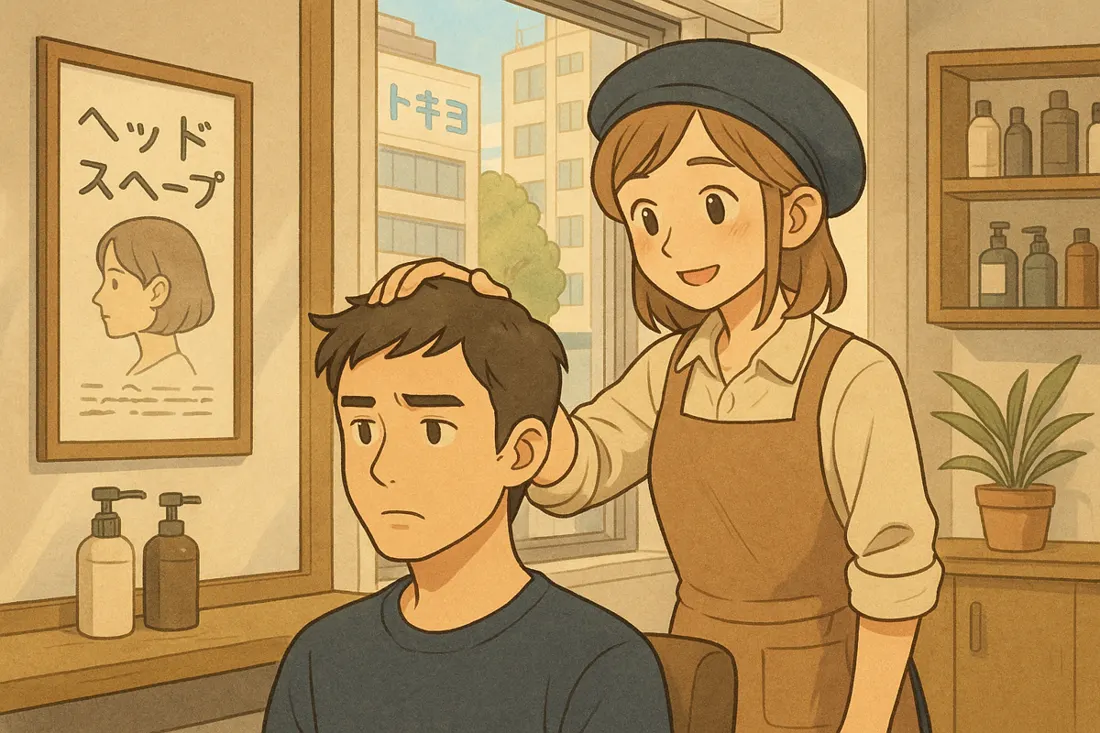
Have you ever found yourself pointing to your head during a conversation with Japanese friends, desperately trying to communicate a headache or compliment someone’s hairstyle? Picture this: you’re in a bustling Shibuya salon, and the stylist asks about your preferred head shape for a new cut. Without knowing how to say “head in Japanese,” you’re left gesturing awkwardly while everyone watches with amused confusion.
Learning body vocabulary, especially how to express “head in Japanese,” opens doors to meaningful conversations about health, appearance, and daily experiences. Whether you’re describing symptoms to a doctor, discussing fashion, or simply expanding your Japanese vocabulary, mastering these essential terms will transform your communication abilities.
The Japanese Word for Head: あたま (Atama)
The most common way to say “head in Japanese” is あたま (atama). This fundamental word appears in countless daily conversations and is essential for anyone serious about learning Japanese.
Pronunciation Guide:
- あたま (atama)
- Phonetic: ah-tah-mah
- Accent: The stress falls on the first syllable
Sample Sentences Using Atama
Basic Usage:
- 頭が痛いです。(Atama ga itai desu.)
- “My head hurts.”
Casual Conversation:
- この帽子は頭に合わない。(Kono bōshi wa atama ni awanai.)
- “This hat doesn’t fit on my head.”
Polite Form:
- 頭を下げてください。(Atama wo sagete kudasai.)
- “Please bow your head.”
Alternative Ways to Say Head in Japanese
While あたま is the standard term, Japanese offers several variations depending on context and formality level.
頭部 (Tōbu) - Medical/Formal Context
In medical settings or formal discussions, “head in Japanese” becomes 頭部 (tōbu). This term appears in:
- Medical reports
- Anatomical discussions
- Academic contexts
Example:
- 頭部の検査をします。(Tōbu no kensa wo shimasu.)
- “We will examine the head.”
首 (Kubi) - Head and Neck Region
Sometimes “head in Japanese” encompasses the neck area, using 首 (kubi):
- 首を振る (kubi wo furu) - “shake one’s head”
- 首が回らない (kubi ga mawaranai) - “can’t turn one’s head”
Common Expressions and Idioms
Japanese culture enriches the concept of “head in Japanese” through various idiomatic expressions that reveal deeper cultural meanings.
Head-Related Idioms
頭がいい (Atama ga ii)
- Literal: “Head is good”
- Meaning: “Smart/intelligent”
- Usage: あの人は頭がいいですね。(Ano hito wa atama ga ii desu ne.) - “That person is smart.”
頭を使う (Atama wo tsukau)
- Literal: “Use one’s head”
- Meaning: “Think hard/use one’s brain”
- Usage: もっと頭を使って考えよう。(Motto atama wo tsukatte kangaeyou.) - “Let’s think harder about this.”
Body Vocabulary Beyond Head in Japanese
Understanding “head in Japanese” connects to broader body vocabulary essential for complete communication. Here are related terms:
Facial Features
- 顔 (kao) - face
- 目 (me) - eyes
- 鼻 (hana) - nose
- 口 (kuchi) - mouth
- 耳 (mimi) - ears
Hair and Head Accessories
- 髪 (kami) - hair
- 帽子 (bōshi) - hat
- ヘルメット (herumetto) - helmet
Learning Tips for Japanese Body Vocabulary
Mastering “head in Japanese” and related vocabulary requires strategic practice. Consider these effective learning approaches:
Visual Association Method
Create mental images linking あたま with familiar objects or situations. When you touch your head, practice saying “atama” aloud.
Context-Based Learning
Practice using “head in Japanese” in various scenarios:
- Medical appointments
- Hair salon visits
- Sports activities
- Daily routines
Conjugation Practice
Learn how あたま works with different particles:
- 頭が (atama ga) - subject particle
- 頭を (atama wo) - object particle
- 頭に (atama ni) - location particle
For comprehensive Japanese study materials, check out our JLPT N5 Study Guide where you’ll find detailed explanations of essential vocabulary and grammar patterns needed for exam success.
Cultural Context and Usage
Understanding “head in Japanese” extends beyond vocabulary into cultural awareness. Japanese society places significant emphasis on bowing and head positioning as signs of respect.
Bowing Etiquette
- お辞儀 (ojigi) - formal bow
- 頭を下げる (atama wo sageru) - to bow one’s head
- Different bow depths convey varying levels of respect
Conclusion
Mastering how to say “head in Japanese” through あたま (atama) provides the foundation for expanded body vocabulary and cultural understanding. From medical conversations to casual chats about hairstyles, this essential word opens countless communication opportunities.
Quick Answer: The Japanese word for head is あたま (atama).
Whether you’re describing a headache, complimenting someone’s intelligence, or navigating Japanese social customs involving bowing, understanding “head in Japanese” vocabulary enhances your linguistic confidence and cultural awareness.
Frequently Asked Questions
Q: What’s the most common way to say head in Japanese? A: あたま (atama) is the standard, most commonly used word for head in Japanese.
Q: Are there formal alternatives to あたま? A: Yes, 頭部 (tōbu) is used in medical and formal contexts when referring to the head.
Q: How do you say “my head hurts” in Japanese? A: 頭が痛いです (Atama ga itai desu) - “My head hurts.”
Q: What’s the difference between あたま and 首? A: あたま (atama) specifically means head, while 首 (kubi) refers to the neck but can include head-related expressions like “shake one’s head.”
Q: Can あたま be used to describe intelligence? A: Yes, expressions like 頭がいい (atama ga ii) mean “smart” or “intelligent.”